How to Survive a Plague: A Practical Preparedness Guide
Plague is not just a medieval history lesson. It still exists today, including in parts of the western United States and other regions of the world. Most modern cases are rare, isolated, and treatable, but plague is serious enough that every preparedness-minded household should understand the basics.
This guide is not about the documentary or book How to Survive a Plague, which covered AIDS activism and public health history. This is a practical guide to the disease itself: how plague spreads, what symptoms matter, what steps reduce risk, and how to prepare your household without falling for panic or bad medical advice.
The hard truth is simple. You survive plague by avoiding exposure, recognizing symptoms early, getting medical care fast, and having enough household readiness to stay put if local officials tell people to limit movement.
BLUF: The Short Version
If plague becomes a local concern, focus on five priorities:
| Priority | What It Means |
|---|---|
| Avoid exposure | Stay away from sick or dead animals, rodent areas, fleas, and close contact with anyone suspected of pneumonic plague. |
| Control pests | Reduce rodent habitat, seal food, treat pets for fleas, and keep animals from roaming into high-risk areas. |
| Watch symptoms | Fever, chills, weakness, swollen lymph nodes, chest pain, cough, bloody sputum, shock, or blackened tissue need urgent attention. |
| Isolate when needed | Pneumonic plague can spread person to person through respiratory particles during close contact. |
| Get medical care fast | Plague can be treated with antibiotics, but treatment has to happen quickly. |
According to the CDC, plague is caused by the bacterium Yersinia pestis and can be life-threatening, but it can be cured with antibiotics when treatment is given quickly. CDC
What Is Plague?
Plague is a bacterial disease that affects humans and other mammals. It is usually associated with rodents, fleas, and wild animal cycles. People can become infected when they are bitten by infected fleas, handle infected animals, or inhale infectious respiratory particles from a person or animal with pneumonic plague.
The word “plague” carries a lot of historical baggage because of the Black Death. That history matters, but it can also distort the modern risk. Today, plague is not a mysterious curse. It is a known bacterial disease. It is dangerous, but it is also understood by modern medicine.
The important part is timing. Untreated plague can move fast. Treated early, survival odds improve dramatically.
The Three Main Types of Plague
Bubonic Plague
Bubonic plague is the form most people associate with swollen lymph nodes called buboes. It usually follows the bite of an infected flea.
Common signs include:
- Sudden fever
- Headache
- Chills
- Weakness
- One or more swollen, painful lymph nodes
The CDC says bubonic plague symptoms usually appear after an incubation period of 2 to 8 days. If it is not treated, the infection can spread to other parts of the body. CDC
Septicemic Plague
Septicemic plague happens when the bacteria multiply in the bloodstream. It can develop from untreated bubonic plague, or it can appear as the first sign of infection.
Warning signs may include:
- Fever and chills
- Extreme weakness
- Abdominal pain
- Shock
- Bleeding into the skin or organs
- Skin or tissue turning black, especially on fingers, toes, or the nose
This is a medical emergency.
Pneumonic Plague
Pneumonic plague infects the lungs. This is the form that matters most during outbreak planning because it can spread from person to person through infectious respiratory particles during close contact.
Symptoms can include:
- Fever
- Headache
- Weakness
- Shortness of breath
- Chest pain
- Cough
- Bloody or watery mucus
The CDC identifies pneumonic plague as the most serious form and the only form that can spread from person to person. CDC
How Plague Spreads
Plague does not spread the same way in every case. Knowing the route of transmission changes the survival plan.
| Route | Main Concern | Practical Response |
|---|---|---|
| Infected fleas | Bubonic plague risk | Use flea control, avoid rodent areas, use repellent where appropriate. |
| Handling infected animals | Bubonic or septicemic risk | Do not handle sick or dead wildlife. Wear gloves if unavoidable and contact local health officials. |
| Respiratory particles | Pneumonic plague risk | Avoid close contact with sick people, use isolation, seek medical help fast. |
| Lab or intentional release | Multiple forms possible | Follow public health alerts, avoid speculation, and act on confirmed local guidance. |
Most people imagine plague as a coughing crowd problem, but that is mainly pneumonic plague. Bubonic plague usually starts with fleas and rodents. That means pest control and animal avoidance are not side issues. They are core prevention.
How To Reduce Plague Risk Around Your Home
The most useful plague prevention steps are not dramatic. They are boring, practical, and effective.
Reduce Rodent Habitat
The CDC recommends reducing rodent habitat around homes, workplaces, and recreational areas. CDC
Start with the obvious stuff:
- Remove brush piles.
- Clear rock piles near the house.
- Get rid of junk piles.
- Keep firewood stacked neatly and away from living areas.
- Remove possible rodent food sources.
- Store pet food and animal feed in sealed containers.
- Seal gaps around sheds, garages, crawl spaces, and outbuildings.
If rodents cannot find food and shelter near your home, your exposure risk drops.
Control Fleas
Fleas are one of the main links between infected animals and people.
Useful steps include:
- Use veterinarian-approved flea control for pets.
- Keep pets from roaming freely in plague-risk areas.
- Do not let roaming dogs or cats sleep in your bed if plague is active in your region.
- Use insect repellent during outdoor activity where fleas may be present.
- Follow product labels carefully for DEET or permethrin products.
Do not treat flea control like a cosmetic pet issue. In a plague area, flea control is part of household disease prevention.
Do Not Handle Sick or Dead Wildlife
If you find dead rodents, squirrels, prairie dogs, rabbits, or other animals in an area where plague is possible, do not pick them up barehanded. Do not let kids poke them with sticks. Do not let pets drag them into the yard.
Call your local health department or animal control if you are unsure how to dispose of an animal carcass.
If you must handle an animal for unavoidable reasons, use gloves and avoid contact with bodily fluids. Then wash thoroughly.
What To Do If Plague Is Reported Near You
A plague report somewhere in the world does not mean your household is in danger. A confirmed case in your county or region is different.
When a local plague concern appears, take these steps:
- Check official sources first.
- Look for updates from the local health department.
- Avoid rumor screenshots and anonymous posts.
- Keep pets away from wildlife and rodent areas.
- Pause camping, hunting, hiking, or field work in affected locations.
- Reduce rodent habitat around your home.
- Check household supplies in case you need to stay home.
- Watch for symptoms after any possible exposure.
- Seek immediate medical attention if symptoms appear.
This is where preparedness helps. If you already have food, water, medicine basics, lighting, communications, and sanitation covered, you do not have to rush into crowded stores during a health scare.
Home Isolation Plan for Pneumonic Plague
Pneumonic plague is the form where home isolation planning matters most. If someone may have pneumonic plague, the goal is to reduce close contact while getting medical help quickly.
A basic household plan should include:
- A separate room for the sick person, if possible.
- One primary caregiver, not the whole family rotating in and out.
- Masks when close contact is unavoidable.
- Separate towels, bedding, and personal items.
- Good ventilation when it is safe to do so.
- A written symptom log.
- A thermometer.
- A phone plan for calling medical providers before arriving.
Do not try to “ride it out” at home if symptoms point toward plague. Isolation is not a replacement for treatment. It is a way to reduce exposure while you get professional help.
When To Seek Medical Help
Treat suspected plague as urgent.
Seek immediate medical attention if someone has possible exposure plus symptoms such as:
- Sudden fever and chills
- Painful swollen lymph nodes
- Severe weakness
- Chest pain
- Shortness of breath
- Cough with bloody or watery mucus
- Shock symptoms
- Blackening skin or tissue
Call ahead if you can. Tell the clinic or hospital about the possible exposure before you arrive. That gives medical staff time to use the right precautions.
The WHO says early diagnosis and antibiotic treatment can save lives, while untreated pneumonic plague can be rapidly fatal. WHO
What About Antibiotics?
Plague is treated with antibiotics, but this is not a do-it-yourself project.
Do not self-dose leftover antibiotics. Do not take fish antibiotics. Do not buy random pills from unknown online sellers. Do not assume one antibiotic works for every person, every form of plague, or every exposure scenario.
Doctors consider the form of plague, severity, age, pregnancy status, medical history, and possible exposure route. Public health officials may also recommend post-exposure prophylaxis for close contacts in certain situations.
The preparedness lesson is not “stockpile mystery pills.” The lesson is to recognize the danger early and reach medical care fast.
Household Supplies That Actually Help
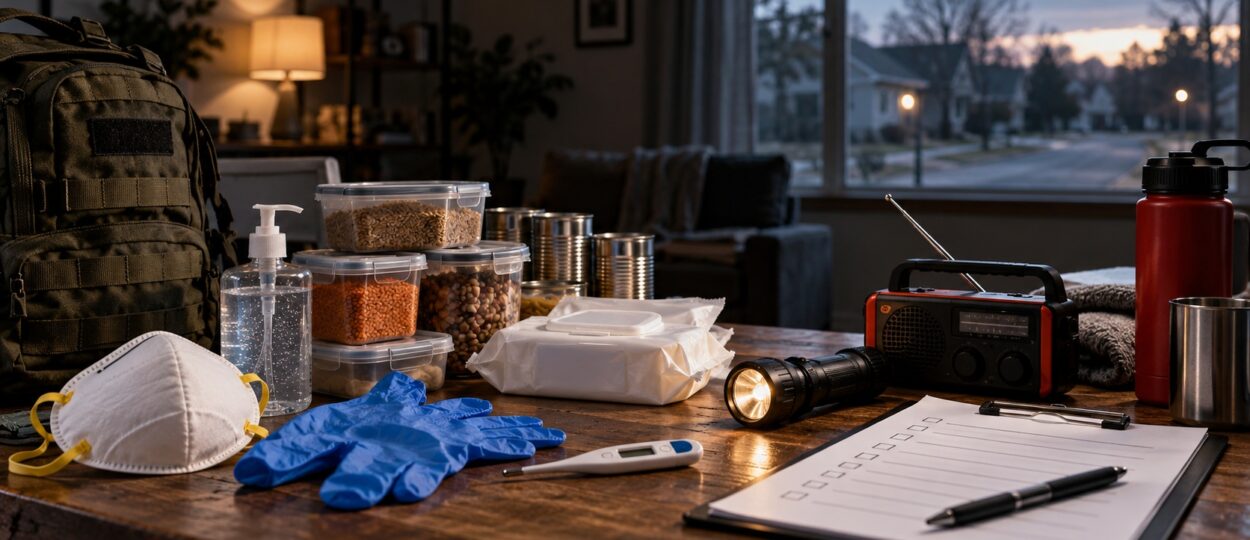
This is not a plague cure list. It is a practical bug-in list for staying home, reducing exposure, and supporting basic household function during a local outbreak.
| Category | Useful Items |
|---|---|
| Health monitoring | Thermometer, symptom notebook, pulse oximeter if available |
| Hygiene | Soap, hand sanitizer, disinfectant, paper towels, trash bags |
| Basic protection | Disposable gloves, well-fitting respirators or masks, eye protection for cleanup tasks |
| Pet and pest control | Flea control, sealed pet food storage, rodent-proof containers |
| Home readiness | Food, water, backup lighting, batteries, radio, phone chargers |
| Comfort care | Oral rehydration supplies, fever reducers, easy meals, clean bedding |
| Documentation | Medication list, doctor numbers, insurance info, local health department contacts |
The goal is simple. If officials recommend staying home, you should not be forced into public spaces because you forgot batteries, pet food, fever medicine, or basic cleaning supplies.
What Not To Do During a Plague Scare
Bad decisions spread almost as fast as bad information.
Avoid these mistakes:
- Do not handle dead animals barehanded.
- Do not let pets roam through rodent areas.
- Do not ignore sudden fever after a possible exposure.
- Do not assume every cough is plague.
- Do not spread unverified outbreak claims.
- Do not self-medicate with random antibiotics.
- Do not wait days to seek help if symptoms are severe.
- Do not rely on medieval plague myths or social media cures.
A serious plague response is calm, fast, and evidence-based.
Black Death Lessons Without Medieval Fantasy
The Black Death was devastating because people had limited medical knowledge, poor sanitation, heavy crowding, and no modern antibiotics. That does not mean plague is harmless today. It means the survival picture is different.
Modern advantages include:
- Faster disease identification
- Antibiotics
- Public health alerts
- Protective equipment
- Better sanitation
- Veterinary awareness
- Lab testing
- Contact tracing
But the old lessons still matter. Crowding matters. Cleanliness matters. Animal control matters. Clear communication matters. Panic makes everything worse.
A Practical Plague Preparedness Checklist
Use this as a household review.
| Task | Done? |
|---|---|
| Remove brush, junk, and rodent shelter near the home | |
| Store pet food and pantry goods in sealed containers | |
| Check flea control for pets | |
| Keep gloves and basic PPE available | |
| Keep disinfectant, soap, and trash bags stocked | |
| Keep at least 2 weeks of essential household supplies | |
| Maintain backup lighting and phone charging | |
| Keep a thermometer and symptom log supplies | |
| Save local health department contact info | |
| Review what symptoms require urgent care |
Preparedness works best before the headline hits.
FAQ: How To Survive a Plague
Can people still get plague today?
Yes. Plague still occurs in some parts of the world, including rural areas in the western United States and regions of Africa and Asia. Cases are rare, but the disease has not disappeared.
Can plague spread from person to person?
Pneumonic plague can spread from person to person through respiratory particles during close contact. Bubonic plague usually does not spread person to person.
Is plague always fatal?
No. Plague can be treated with antibiotics, especially when caught early. Untreated plague can be fatal, particularly pneumonic and septicemic plague.
Is there a plague vaccine?
The CDC says a plague vaccine is not currently available in the United States for the general public. New vaccines are in development, but they are not expected to be commercially available in the immediate future. CDC
Should I wear a mask during a plague outbreak?
If pneumonic plague is suspected locally, masks or respirators may help reduce exposure during close contact, but they are only one layer. Avoiding close exposure, isolating the sick, and getting medical care quickly matter more.
What is the best way to survive plague?
Avoid exposure, control rodents and fleas, recognize symptoms early, isolate suspected pneumonic cases, and seek medical care immediately. Plague survival depends heavily on speed.
Final Action Review
A plague scare is not the time to become an amateur doctor. It is the time to become hard to expose, easy to isolate, and fast to treat.
Keep rodents away from your home. Keep fleas off your pets. Do not handle sick or dead animals. Know the symptoms. Have enough supplies to stay home if local officials recommend it. If symptoms appear after a possible exposure, get medical help immediately.
That is the real survival plan. Not panic. Not rumors. Not miracle cures.
Preparedness gives you time, distance, and options. In a plague scenario, those three things matter.