





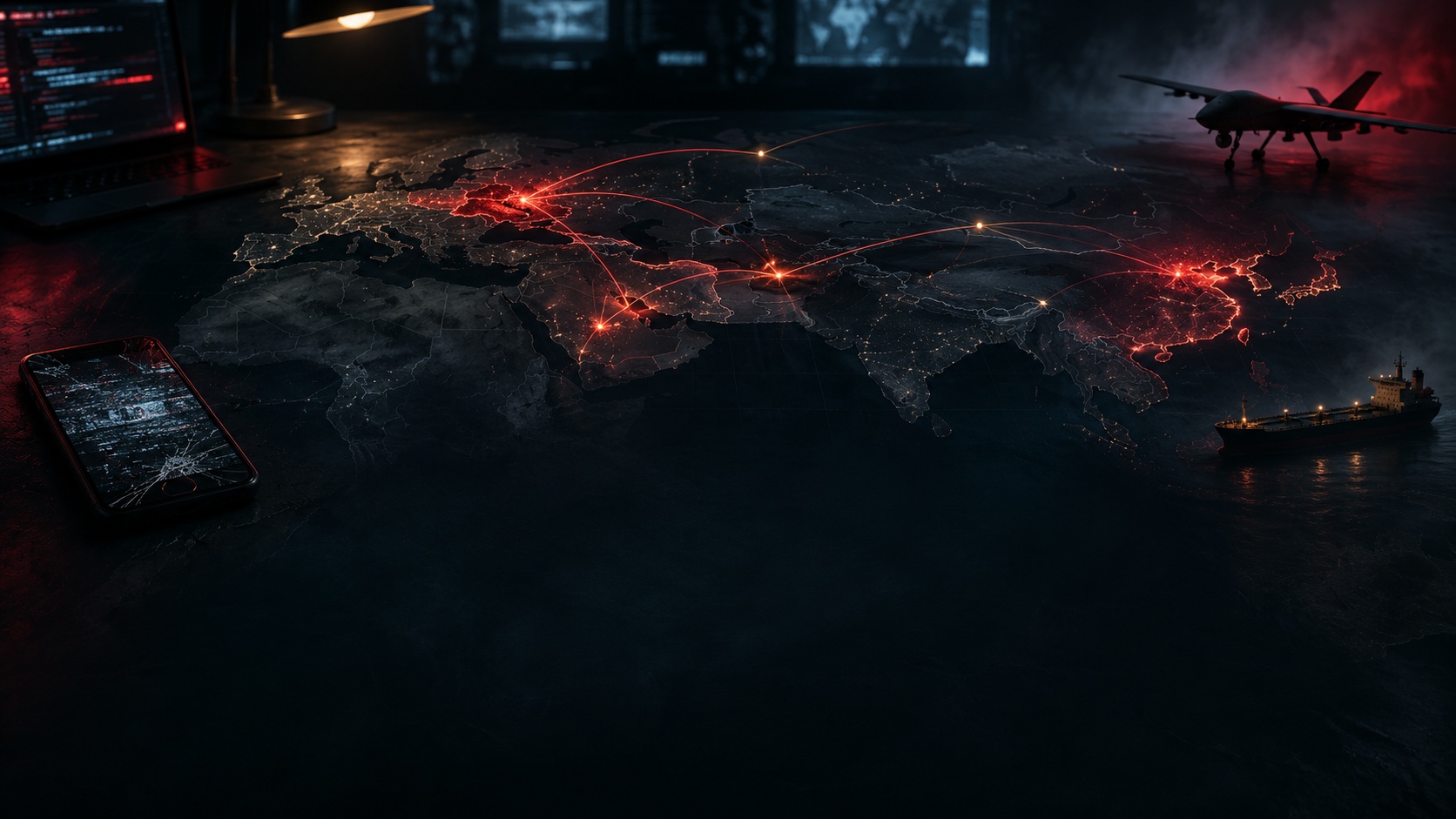
TL;DR: No government or international body has declared that World War III has started. A growing group of analysts argues that it may already be underway in a new form: linked wars in Ukraine and the Middle East, cyberattacks, sabotage, economic pressure, and information warfare. Other experts say these are overlapping regional conflicts that have not yet merged into one global war. For ordinary Americans, the practical answer is the same either way: modern conflict can reach your bank account, power grid, and news feed long before anyone declares war.
The question keeps trending for a reason. Russia’s war in Ukraine is in its fifth year. The United States and Israel have been at war with Iran since February 2026. North Korean soldiers have fought on Russian soil.
None of that fits the old picture of a world war. That gap is where the debate lives.
Has World War 3 Started? The Short Answer
No universally accepted assessment identifies the current conflicts as World War III. However, some prominent analysts argue that elements of a new global war are already underway.
The disagreement comes down to definitions. A conventional world war, like 1914 or 1939, meant great powers fighting each other directly, mass mobilization, and whole economies retooled for war.
A modern global struggle can look very different. It can involve proxy forces, cyber operations, sanctions, shipping attacks, and propaganda, with major powers rarely firing directly at each other.
A future world war might also lack an obvious beginning. Historians still disagree about when World War II started. For Europeans it was September 1939. For Americans it was December 1941. For many Chinese, it began in 1937 or even 1931.
The absence of formal declarations doesn’t settle anything, either. The United States hasn’t formally declared war since 1942. Wars get fought anyway.
Why Some National Security Experts Believe WW3 Has Already Begun
Fiona Hill: Modern Warfare Goes Far Beyond the Battlefield
Fiona Hill served as the senior director for European and Russian affairs on the National Security Council. In a March 2022 CBS News interview with Ted Koppel, Hill described Russia’s approach to conflict in broad terms. She listed propaganda, cyberattacks, ransomware, information operations, and the use of criminal groups. Koppel asked whether that meant the world was already engaged in World War III. Hill answered: “Exactly.”
Her framing matters for Americans. Under this view, you could experience a world war without ever seeing a foreign soldier. It could show up as a ransomware attack on your hospital, a hacked pipeline, a spike in fuel prices, or a coordinated campaign flooding your social feeds.
Bret Stephens and the Historical Argument
In August 2026, New York Times columnist Bret Stephens published “Has World War III Already Started?” It revisited a column he wrote shortly after Russia’s 2022 invasion.
His core argument is historical. World War II didn’t begin with one event. It grew out of separate regional crises, starting with Japan’s 1931 invasion of Manchuria, that gradually became connected.
Stephens sees similar dynamics today. He pointed to five trends:
- Conflicts in different regions are merging, with fighting in one theater draining supplies, such as interceptor missiles, needed in another
- Russia, China, Iran, and North Korea are providing military aid and intelligence to one another
- Western allies are divided
- Western militaries face munitions shortages and a weak industrial base
- Economic fragility could make every other trend worse
The Argument for a New Kind of Global Conflict
Separate wars can become strategically linked without any formal alliance. That’s the heart of the “it’s already started” case.
Russia, Iran, North Korea, and China do not form a single unified military alliance. They have no NATO-style command structure.
What they share is opposition to U.S. power, plus practical deals that help one another. Iranian drone designs have shown up in Russia’s arsenal. North Korean artillery shells and troops have supported Russia’s war. China has supplied Russia with dual-use components and bought its oil.
The linkage works through resources. A Patriot interceptor fired over the Persian Gulf isn’t available for Kyiv. A Navy destroyer escorting tankers near Hormuz isn’t in the Western Pacific. Every theater pulls from the same limited stockpiles.
What Would a World War Look Like Without a Traditional Battlefield?
Proxy Wars
Proxy warfare means fighting through someone else. A state supports another country or an armed group with weapons, money, intelligence, training, and political cover, while avoiding direct combat itself.
Ukraine is the largest example. Western governments have supplied weapons and intelligence to Kyiv. Russia has drawn on Iranian drones and North Korean troops and munitions.
The Middle East has run on proxy logic for decades. Iran has armed and funded Hezbollah, the Houthis, and militias in Iraq and Syria.
Cyberwarfare
Cyber operations let states attack without crossing a border. The main forms include:
- State-sponsored hacking and espionage against government agencies and defense contractors
- Intrusions into critical infrastructure, including power grids, water systems, pipelines, and ports
- Attacks on financial networks and communications systems
- Ransomware gangs operating from countries that tolerate them
Most of this happens below the threshold of conventional armed conflict. A hacked utility doesn’t trigger a NATO response the way a missile strike would. That ambiguity is the point.
Information Warfare and Election Interference
Information warfare targets what people believe. Its tools include:
- Propaganda and coordinated influence operations
- Hacking and leaking political information at strategic moments
- Fake accounts and bot networks that manipulate online discourse
- Campaigns designed to undermine trust in elections, courts, and the press
- AI-generated misinformation and synthetic media, including deepfake audio and video
Economic Warfare and Supply Chains
Economic pressure has become a front line. Sanctions on Russia and Iran aim to choke off revenue for their militaries. Export controls on advanced chips aim to slow China’s military technology.
The pressure runs both ways. China dominates processing for many critical minerals used in weapons and electronics.
Shipping is the most visible pressure point right now. Attacks on tankers have sharply slowed traffic through the Strait of Hormuz, and American drivers have felt it at the pump.
Sabotage and Gray-Zone Operations
Gray-zone operations sit between peace and open war. Examples include:
- Suspected sabotage of undersea cables and pipelines in the Baltic Sea
- Widespread GPS jamming and spoofing affecting civilian aircraft and ships in Europe and the Middle East
- Arson and sabotage plots targeting European infrastructure and logistics sites
- Covert operations with built-in deniability
Each incident alone looks minor. Together, they form a pattern that some analysts consider part of a wider conflict.
Did Russia’s 2016 Election Interference Represent an Early Front in a New Kind of War?
What CrowdStrike Discovered Inside the Democratic National Committee
The DNC hired cybersecurity firm CrowdStrike in 2016 after detecting suspicious activity on its network. CrowdStrike published its findings in June 2016.
The firm identified two separate intrusion groups. It called them Cozy Bear and Fancy Bear.
CrowdStrike attributed Cozy Bear to Russian intelligence, commonly linked to the FSB or SVR. It attributed Fancy Bear to the GRU, Russia’s military intelligence agency. According to CrowdStrike, Cozy Bear had been inside the network since the summer of 2015. Fancy Bear entered in April 2016.
The findings on stolen data carry an important distinction. In closed-door 2017 testimony to the House Intelligence Committee, released in 2020, CrowdStrike president Shawn Henry said the company had indicators that data was exfiltrated, but did not directly observe it leaving the network.
What American Intelligence Agencies Concluded
In January 2017, the CIA, FBI, and NSA released an Intelligence Community Assessment. It concluded that Russia ran an influence campaign targeting the 2016 election, combining cyber operations with state media and paid social media activity.
The bipartisan Senate Intelligence Committee later released a five-volume report between 2019 and 2020. It generally supported the core findings on Russian interference. It also documented Russian efforts to probe state election systems.
One distinction is essential. Election interference is not the same as changing vote totals. The intelligence community did not assess the impact on the election’s outcome, and the Senate Intelligence Committee found no evidence that any vote tallies were altered.
Why the 2016 Campaign Matters to the WW3 Argument
The 2016 operation shows how a hostile state can attack another country’s domestic politics without firing a shot. That’s why it comes up in the WW3 debate.
The documented facts and the larger interpretation are separate things. The intrusions and influence operations are well established. Whether they were an early front in a world war is an argument, not a finding.
The Hot Wars Already Taking Place
Russia and Ukraine
The war in Ukraine is a conventional war of artillery, drones, trenches, and missile strikes on cities.
Foreign involvement runs deep on both sides. Western nations supply weapons and intelligence to Ukraine. North Korea and Iran supply Russia.
The escalation risk centers on NATO. Russian drones and missiles have strayed into NATO airspace, and NATO regularly scrambles fighter jets to intercept Russian bombers near its borders.
The Middle East
The U.S.-Israel war against Iran began in February 2026. A ceasefire in April did not produce a lasting settlement. By November, the conflict had settled into what Iran’s leadership calls a state of “neither war nor peace,” with Iran using its position on the Strait of Hormuz as leverage.
The war has pulled in Gulf states, disrupted global oil markets, and absorbed U.S. military resources. It has also cost American aircraft, including the F-15E Iran shot down and the rescue mission that followed.
China and Taiwan
Taiwan is a potential future flashpoint, not a current war. China has steadily increased military pressure around the island, including large-scale exercises and incursions into Taiwan’s air defense zone.
The concern for WW3 watchers is timing. Some analysts worry Beijing could see an opening while U.S. forces and munitions are stretched by other theaters. For a closer look at that scenario, see what happens if the U.S. goes to war with China.
North Korea’s Role
North Korea has become a direct participant in Russia’s war. Pyongyang sent an estimated 14,000 troops to help Russia retake its Kursk region, and South Korean, Ukrainian, and Western sources report more than 6,000 were killed in the fighting.
Russia and North Korea signed a mutual defense pact in 2024 and agreed to long-term military cooperation in 2026. That links the Korean Peninsula to the European war in a way that didn’t exist five years ago.
Why Other Analysts Say World War 3 Has Not Started
In November 2026, Robert Muggah published a report for the Toda Peace Institute titled “Has World War III Already Begun?” His answer is no. He notes that neither international law nor conflict research provides an agreed definition of a world war. He separates the likelihood of several simultaneous confrontations from the much more demanding conditions for a systemic global war. His conclusion: the evidence does not suggest World War III has begun, though the ways regional conflicts could reinforce one another are becoming more consequential.
A September 2026 analysis in the Lowy Institute’s The Interpreter, written by defense strategist Al Hynes, makes a related case. Hynes argues that what made the two world wars distinct was domestic depth, the mobilization of entire societies and industries, more than geographic breadth. He suggests the Seven Years’ War of 1756 to 1763 is a better analogy: several related conflicts across continents, linked by alliances, with separate causes.
The difference between a global conflict and several regional conflicts comes down to a few factors:
| Factor | Several regional conflicts | A world war |
|---|---|---|
| Combatants | Mostly local or proxy forces | Great powers fighting each other directly |
| Coordination | Opportunistic support | Shared war aims and joint planning |
| Mobilization | Limited, professional militaries | Conscription and wartime economies |
| Theaters | Separate, loosely linked | Strategically integrated |
| Home front | Indirect effects | Rationing, industrial conversion, direct threat |
By most of those measures, today’s conflicts sit in the left column with some movement toward the right.
What Would Turn Today’s Conflicts Into an Undeniable World War?
Several developments would end the debate quickly:
- Sustained direct combat between Russia and NATO countries
- Major U.S.-China hostilities involving Taiwan or the broader Pacific
- Expansion of current partnerships into coordinated warfare across multiple regions
- Large-scale national mobilization, including conscription in major powers
- Widening strikes on strategic infrastructure such as power grids, satellites, and financial systems
- Any use of nuclear weapons
Escalating conflicts can reinforce one another. A Taiwan crisis during an active Middle East war would strain U.S. forces far more than either alone.
Not every warning sign means a global war is inevitable. Nuclear deterrence still restrains the major powers, and crises have been contained before. Here’s what experts estimate for the probability of nuclear war over the next year.
What Does This Mean for Ordinary Americans?
The useful response is resilience, not panic. Whether historians later call this period World War III or not, the effects already reach American homes.
Focus on a few practical steps:
- Tighten your personal cybersecurity. Use a password manager, turn on multi-factor authentication, and treat unexpected emails and texts as suspect.
- Prepare for temporary disruptions. Plan for power, internet, and cell outages lasting several days.
- Keep essentials on hand. Stock water, shelf-stable food, prescription medications, flashlights, batteries, and a first aid kit. A bug-out bag checklist covers the portable version.
- Create a family communications plan. Agree on meeting points and an out-of-state contact. Learn how to stay in touch without the internet in case local networks go down.
- Build better information habits. Check sources before sharing, be skeptical of viral clips during a crisis, and watch for AI-generated fakes.
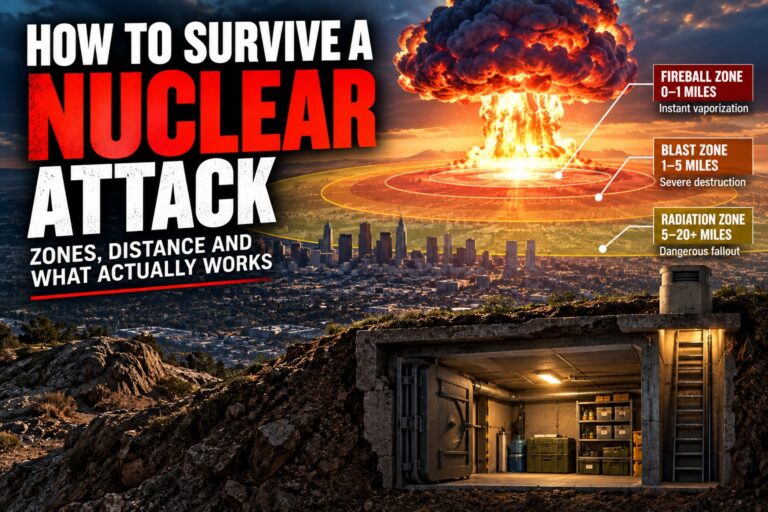
For a deeper checklist, see our guide on how to survive WW3.
Frequently Asked Questions
Has WW3 officially started?
No. No government or international body has declared it. The debate is whether today’s linked conflicts already amount to one.
Could World War 3 be fought primarily through cyberattacks and proxy wars?
Some experts think so. Analysts like Fiona Hill argue that cyber operations, propaganda, sabotage, and proxy wars can function as a form of global war. Critics say a true world war requires direct great-power combat and mass mobilization.
Was Russia’s interference in the 2016 U.S. election an act of information warfare?
The U.S. intelligence community and the Senate Intelligence Committee concluded that Russia ran a deliberate influence campaign combining hacking, leaks, and social media manipulation. Many analysts call that information warfare. No evidence shows vote totals were changed.
What could trigger a full-scale World War 3?
The most commonly cited triggers are direct combat between Russia and NATO, a U.S.-China war over Taiwan, or nuclear use in any theater.
How would Americans know if a global war was escalating?
Watch for direct clashes between major powers, NATO invoking Article 5, talk of conscription, large-scale attacks on U.S. infrastructure, and emergency economic measures such as fuel rationing.
The Next World War May Not Have an Obvious Starting Date
So, has WW3 started? Officially, no. The honest answer is that nobody can say for certain yet.
A future historian might point to an earlier event as the opening phase. It could be 2014, 2022, or February 2026. Historians still argue over whether World War II began in 1931, 1937, or 1939.
The more useful question may be a different one. Are today’s military, economic, political, and technological conflicts becoming connected enough to produce a wider global confrontation?
The distinction matters. Modern conflict can reach your power, your savings, and your information long before any country formally declares war.
Key Takeaways
- No government or international body has declared that World War III has started.
- Analysts such as Fiona Hill and Bret Stephens argue that a new kind of global war may already be underway through linked conflicts, cyberattacks, and information warfare.
- Skeptics, including Robert Muggah and the Lowy Institute’s Al Hynes, say these are overlapping regional conflicts that haven’t crossed the threshold into a world war.
- Russia, China, Iran, and North Korea cooperate with one another but are not a unified military alliance.
- Russia’s 2016 election interference is a documented example of cyber and information operations, and no evidence shows vote totals were changed.
- Direct Russia-NATO combat, a U.S.-China war over Taiwan, or nuclear use would mark an undeniable escalation.
- Practical resilience, including cybersecurity, emergency supplies, and a family communications plan, makes sense regardless of what historians eventually call this era.






Leave feedback about this